Bożena Gierek
Jagiellonian University in Kraków
1 book
Publications
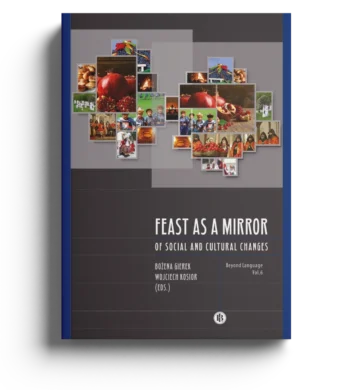
Feast as a Mirror of Social and Cultural Changes
Check out bookPublished with Æ Academic:
(2020) “Lajkonik (Hobby Horse) as Theatrum of the Period of Corpus Christi in Kraków (Poland).” [In:] Bożena Gierek, Wojciech Kosior (eds.) Feast as a Mirror of Social and Cultural Changes. (Beyond Language 6). San Diego, CA: Æ Academic Publishing; 116‒136.
Lajkonik (Hobby Horse), also called the Little Horse of Zwierzyniec (now one of the districts of Kraków), can be seen in Kraków every year in June, on the eighth day of the Corpus Christi celebrations. Lajkonik, a man dressed in a historical Tatar attire, on a beautifully adorned wooden horse, accompanied by his retinue, admired by crowds of people along his route, proceeds in a dancing manner from the Premonstratensian Convent in the district of Zwierzyniec to the Main Market Square. This tradition goes back at least to the 18th century. There are two main hypotheses concerning its origin: a pagan one, connected with spring magical rituals, which is forgotten today; and the other one, connected with the historical event—when in 1287 Tatars came to the gates of Kraków. The ritual of Lajkonik is perceived as a mythological theatrum, in which an event from the Polish national history is transferred into and displayed—as any myth—as a performance in which the audience participates. In this chapter the Author analyzes all elements of the performance such as: the plot, its meaning, the structure, the rhythm, the actors, their costumes and acting, the atmosphere, the space—the route of the procession. The comparison of the performance in the past and at present gives an insight into changes in the ritual in the course of time. The Author drew from the written sources which comprise the oldest and recent descriptions of the Lajkonik celebration, as well as from her observations made while participating in this event partly (at the Main Market Square) several times since the 1980s, and in 2017 following the whole route of Lajkonik.
(2020) Introduction: Feast as a Mirror of Social and Cultural Changes [In:] B. Gierek & W. Kosior (Eds.), Feast as a Mirror of Social and Cultural Changes (Beyond Language 6). San Diego, CA: Æ Academic.; 1-16
n/a