Hans Sauer
Ludwig-Maximilians-Universität (LMU) in Munich
1 book
His research interests and publications include editions and studies of me- dieval English texts, e.g. Beowulf, word-formation, glosses, glossaries and lex- icography, plant names, interjections and binomials. Some of his recent book publications include Binomials in the History of English (with Joanna Kopaczyk; 2017, CUP); Aspects of Medieval English Language and Literature (with Michiko Ogura; 2018, Peter Lang); Planting the Seeds of Knowledge: An Inventory of Old English Plant Names (with Elisabeth Kubaschewski; 2018, Utz); My First Door to English Linguistics (with Kerstin Majewski; 2020, Stauffenburg).
Publications
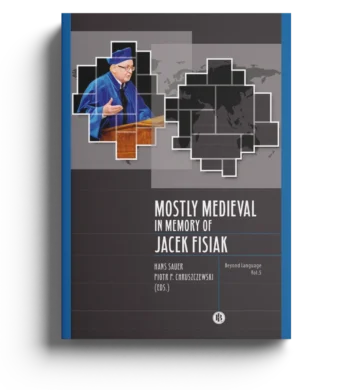
Mostly Medieval: In Memory of Jacek Fisiak
Check out bookMiędzy tekstem a kulturą: Z zagadnień interpretacyjnych
Check out bookPublished with Æ Academic:
(2020) “Medieval Multitasking: Hoccleve translates Christine de Pizan and imitates Chaucer, for example his binomials.” [In:] Hans Sauer, Piotr P. Chruszczewski (eds.) Mostly Medieval: In Memory of Jacek Fisiak. San Diego, CA: Æ Academic Publishing; 175‒202.
Christine de Pizan wrote her French poem Epistre au dieu d’amours ‘Letter of the God of Love’ in 1399; Thomas Hoccleve rendered it into Middle English only three years later, in 1402, under the title Epistre de Cupide ‘Letter of Cupid’. He shortened Christine’s 822 lines to 476 lines and also changed many details; therefore the two versions are difficult to compare. I concentrate on Hoccleve’s use of binomials and multinomials, analysing their word-class, etymology, semantic structure, sequence of elements, and their formulaicity. I also briefly mention later versions and translations. It is well-known that Hoccleve was a Chaucerian, which also shows in his use of binomials: Hoccleve shares 13 binomials with Chaucer, e.g. (in Modern spelling) ‘crop and root’, ‘a duchess or a queen’, ‘labour and travail’, ‘last and endure’. It is perhaps more striking that many of Hoccleve’s binomials also occur in the poetry of his contemporary Lydgate. It would be interesting to pursue this in greater detail.
(2022) Opis własny i autobiografia w średniowiecznej Anglii: między konwencją a indywidualnością [Self-Description and Autobiography in Medieval England: Between Convention and Individuality] [In:] P. P. Chruszczewski & A. R. Knapik (Eds.), Między tekstem a kulturą: z zagadnień interpretacyjnych (Beyond Language 7). San Diego, CA: Æ Academic.; 451-470
Artykuł poświęcony średniowiecznym tekstom o charakterze autobiograficznym, pisanym w Anglii przez Anglików, przybyszy z zagranicy lub tych, którzy urodzili się w Anglii, lecz z niej wyemigrowali z własnej (nie)przymuszonej woli. Materiał badawczy obejmuje szeroki zakres utworów, od wzmianek odautorskich do pełnych autobiografii, jak Księga Margery Kempe – uważana za pierwszą właściwą autobiografię w języku angielskim. Niniejszy wybór tekstów jest węższy niż u wcześniejszych badaczy, bowiem wyłączam z niego autobiografie postaci fikcyjnych, jak Beowulf czy narratorzy staroangielskich elegii. Granicę między tym, co autentyczne, a tym, co fikcyjne, trudno jednak czasem precyzyjnie wytyczyć, dlatego wspominam tu narratora elegii Deor, który podaje w niej swe imię. Często też niełatwo ustalić, czy dany fragment autobiograficzny dotyczy zdarzeń z życia czy toposu – konwencjonalnego obrazu, który również może dotyczyć faktów. Właśnie dlatego w pewnych przypadkach badacze ostatecznie nie identyfikują danego autora, nawet jeżeli są do niego odniesienia w tekście. Dotyczy to choćby Cynewulfa czy Nicholasa z Guildford, mędrca wspomnianego w poemacie Owl and Nightingale. Jedynym autorem, który jednoznacznie opisuje siebie z pewnym odcieniem ironii, jest Chaucer – co potwierdza jego wyjątkowy status wśród poetów angielskiego średniowiecza.
This article discusses autobiographical remarks and autobiographies written in medieval England by English authors or by authors who either came to England or were born there but moved – or had to move – abroad. The subject matter material encompases passages where authors simply mention their name to fully-fledged autobiographies, such as the Book of Margery Kempe, often regarded as the first genuine English autobiography. My scope, however, is narrower than that of some previous critics, since I exclude autobiographies by clearly fictitious characters such as Beowulf or the speakers in OE elegies. Still, the borderline between the genuine and the fictitious is not always easy to draw, thus I also briefly mention the Old English elegy Deor, where the speaker quotes his name (Deor), probably a fictitious character. It is also not always easy to decide where the autobiography describes real events or uses topoi, or conventionalized images, since even a conventionalized image can express real events. Due to these and similar problems, scholars have not been able to identify some authors or characters, even if their names are mentioned. This applies to poet Cynewulf or Nicholas of Guildford, who is referred to as a wise man at the end of the Early Middle English poem “Owl and Nightingale.” The only author who describes himself with a bit of clear self-irony is Chaucer– which confirms his exceptional status among the medieval English poets.