
Joanna Stolarek
Siedlce University of Natural Sciences and Humanities
1 book
The recipient of the Polish-American Tadeusz Kosciuszko Grant in the City College of New York. Conducted research on the comparative project, “Transgressing Gender, Class and Ethnic Boundaries: Detecting Transcultural Identities in North American, Spanish and Latin American Crime Narratives. New York, 5th August 2024 – 25th January 2025.
Skills: research project managements skills, organisational skills, leadership skills -organising confefences, seminars, workshops, chairing conference sessions, coordinating students and young researchers'initiatives, like plays staging, supervising and reviewing BA and MA theses. [source: LinkedIn]
Publications
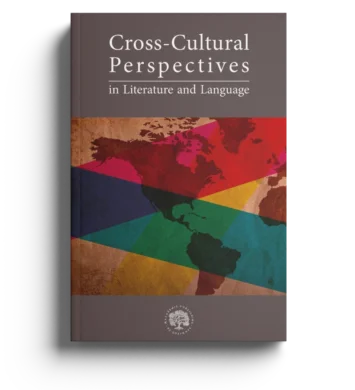
Cross-Cultural Perspectives in Literature and Language
Check out bookPublished with Æ Academic:
(2017) “American South in the face of European fascism in Katherine Anne Porter’s Ship of Fools and Carson McCullers’s The Heart Is a Lonely Hunter.” [In:] Joanna Stolarek, Jarosław Wiliński (eds.) Cross-Cultural Communication in Literature and Language. San Diego, CA: Æ Academic Publishing; 45–66.
The aim of this article is to scrutinize the problem of alienation and marginalization in the face of social and political hegemony in Europe and its reverberations in the southern states of the USA in Katherine Anne Porter’s Ship of Fools (1962) and Carson McCullers’s The Heart Is a Lonely Hunter (1940). The emphasis is placed on the examination of the two novels with reference to their exploration of the roots of European Fascism and the conditions that favored its rise. The author of the article analyzes the issues of ethnic discrimination and social exclusion in Ship of Fools versus racial conflicts and the problem of hegemony saturating The Heart Is a Lonely Hunter, along with the books’ central motifs, such as search for identity, crisis of intercultural dialogue, and social dislocation. Despite the novels’ thematic and structural dissimilarities, they accurately display the spirit of the interwar period, existential anxiety, and deep concern with the emergence of the dictatorial ideologies, which inevitably led to social marginalization and exclusion of a number of individuals.