
Piotr P. Chruszczewski
University of Wrocław, Poland
4 books
Head of the College for Interdisciplinary Studies, University of Wrocław; chairman of the Committee for Philology of the Polish Academy of Sciences, Wrocław Branch; holder of grants from the Foundation for Polish Science, Fulbright Commission, and the Lanckoroński Foundation.
Prof. Chruszczewski is a truly international scholar who has conducted research at numerous academic centers in cooperation with or studying under, a. o., Ronald Langacker at the University of California, San Diego; Alessandro Duranti at the University of California, Los Angeles; and Michael Barnes at the University College, London. He also spent time at Stanford University and the University of North Carolina, Greensboro; as well as the British Library, London. He has guest lectured or conducted research in Austria (Salzburg), Denmark (Aarhus, Copenhagen), Spain (Alicante), Israel (Jerusalem), Malta (La Valetta), Germany (Berlin, Dresden, Leipzig, Magdeburg), Romania (Bacau, Bucharest), Switzerland (Lugano), Sweden (Örebro, Stockholm), the US (Los Angeles, San Diego, Stanford, Washington), Great Britain (London, Oxford), and Italy (Bergamo, Bologna, Florence, Genoa, Milan, Modena, Pavia, Rome, Verona).
His monographs include Językoznawstwo antropologiczne. Zadania i metody [Anthropological Linguistics. Tasks and Methods of Research] (2011); Cultural Patterns in Discursive Practices of Scandinavian Speech Communities in the Viking Age. On the Basis of Runic Inscriptions of North-Central Jutland (2006); American Presidential Discourse. An Analysis (2003) and The Communicational Grammar of Political Discourse (2002). He is an editor or co-editor of sixteen monographs and in-house editor of four scientific periodicals (Academic Journal of Modern Philology, Styles of Communication, Półrocznik Językoznawczy TERTIUM, Studia Anglica Resoviensia). He is also the originator and organizer of the international conference Languages in Contact.
He is a fellow at the International Communicology Institute (since 2011) and a founding member of the Polish Society for Human and Evolution Studies, established in 2013 in Wrocław. He has provided expertise for domestic and foreign government institutions. Since 2015 he is the Rector’s representative for the talented youth, actively promoting advanced interdisciplinary research.
Author books
Publications
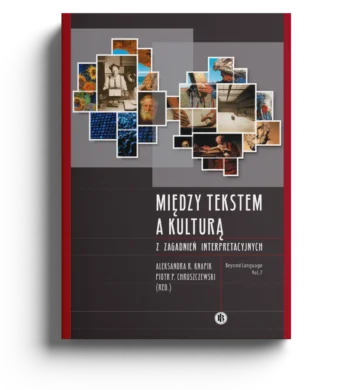
Między tekstem a kulturą: Z zagadnień interpretacyjnych
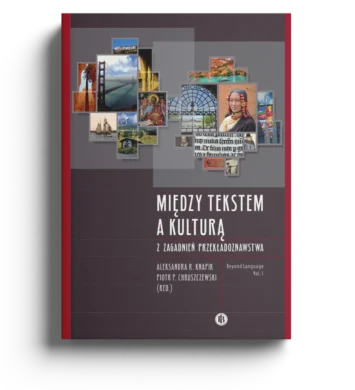
Check out bookMiędzy tekstem a kulturą: Z zagadnień przekładoznawstwa
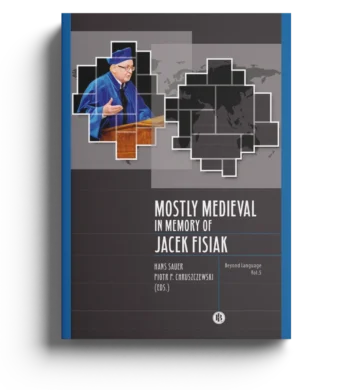
Check out bookMostly Medieval: In Memory of Jacek Fisiak
Check out bookPublished with Æ Academic:
(2022) Reportaż narracyjny pióra Jacka Hugo-Badera jako interpretacja rzeczywistości [Narrative Report by Jacek Hugo-Bader as a Way of Interpreting Reality] [In:] P. P. Chruszczewski & A. R. Knapik (Eds.), Między tekstem a kulturą: z zagadnień interpretacyjnych (Beyond Language 7). San Diego, CA: Æ Academic.; 72-85
Niniejszy fragment pochodzi z powstającego aktualnie obszernego tekstu, który podejmuje się analizy reportaży narracyjnych rozumianych jako interpretacja rzeczywistości. Piotr Chruszczewski przedstawia tu krótki przegląd specyficznych sposobów Jacka Hugo-Badera (JHB) na oddanie rzeczywistości w doskonałych reportażach narracyjnych, mocno zakorzenionych w pracy terenowej.
Zdaniem autora interpretacja prawdziwego znaczenia komunikatu nie wynika wyłącznie ze stylu danego tekstu. Dzieje się tak, ponieważ by pojąć faktyczne znaczenie jakiegokolwiek komunikatu, należy dogłębnie zrozumieć informację, którą ten interpretuje. A do istoty prawdziwego znaczenia opisywanej rzeczywistości dotrzeć można tylko w jeden sposób: dzięki metodzie zwanej obserwacją uczestniczącą. JHB zna ją doskonale, dlatego wszystkie jego reportaże narracyjne poprzedza intensywna praca w terenie.
Łatwo pokusić się o wniosek, że JHB idzie o parę kroków dalej i nie tylko aktywnie uczestniczy w sytuacjach, które opisuje, ale też tworzy i interpretuje rzeczywistość, którą przyjdzie mu przekazać w reportażu. Jego wartka narracja, wyrazisty, idiosynkratyczny styl czy obrazowe komentarze do rzeczywistości sprawiają, że ze zwykłego reportażysty przeradza się we wnikliwego interpretatora płynnie zmieniającej się rzeczywistości, która go otacza.This passage is just a small fraction of a much larger work in progress, which attempts at an analysis of narrative reports understood as ways of interpreting reality. This text provides a brief overview of Jacek Hugo-Bader’s (JHB) idiosyncratic ways of rendering reality in his excellent very much fieldwork-based narratives.
Piotr Chruszczewski is of the opinion that the true meaning of the communicated message changes not only with the style of the text. It so happens, because the key to understanding the actual meaning of any text of this type is the profound knowledge of the interpreted information. There is only one way to get to the true core meaning of the described reality, and it is by the method known as participant observation. JHB knows it very well, and that is why all his narrative reports are preceded by extended fieldwork.
One may reach an easy conclusion that JHB goes a few steps ahead and is not only a participant in the field situations which he describes – but also a creator and interpreter of the reality rendered in his narrative reports. By means of his vivid down-to-earth idiosyncratic style, his dynamic narration, as well as picturesque commentaries, JHB has become an insightful interpreter, and not just a mere reporter of the fluctuating reality that he’s surrounded with.
(2018) Przekładoznawstwo jako domena językoznawstwa antropologicznego
[Translation Studies as a domain of anthropological linguistics] [In:] P. P. Chruszczewski & A. R. Knapik (Eds.), Między tekstem a kulturą: z zagadnień przekładoznawstwa (Beyond Language 1). San Diego, CA: Æ Academic.; 77–94
W pracy wychodzi się z powszechnie akceptowanego założenia, że podstawowym materiałem każdego przekładu jest język. To właśnie język jest bowiem integralną częścią kultury, z uwagi na swoją złożoną naturę – jest on wyszukanym narzędziem komunikacji używanym do precyzyjnego wyrażania myśli, a zarazem częścią wyrażanych myśli. Właśnie ze względu na tę złożoność język jest elementem rzeczywistości, a co więcej, może w znacznym stopniu przyczyniać się do różnych zmian rzeczywistości, w której funkcjonuje. Jednakże nie ma języka niezmiennego. Języki słyną z tego, że bezustannie się zmieniają, a tym samym katalizują zmiany w sobie nawzajem oraz w rzeczywistości pozawerbalnej. Języki można rozumieć jako socjokulturowe ścieżki adaptacji ludzi do otaczających ich warunków, stąd proces przekładu jest również procesem opisu tego, jak ludzie żyjący w określonym historycznie okresie radzą sobie w konkretnych socjokulturowych warunkach. Dlatego właśnie jestem zdania, że przekładoznawstwo jest jedną z domen badawczych językoznawstwa antropologicznego.
The article starts with the well-known assumption that our most basic working material in the process of translation is language. Language is an integral part of culture, as its complex nature, being a sophisticated communication tool used for precise expression of thought and a part of the expressed thoughts, determines the fact that language is an element of reality and, what is more, it can significantly contribute to various types of changes of the reality in which it functions. However, there is no language that is given once and for all. Languages are notorious for all the changes that take place in them, and also for all the changes which they accelerate. Languages can be understood as socio-cultural means in which humans adapt to their varying environments. Therefore, an act of translation is also an act of description of how people of a certain period were getting on in a particular socio-cultural environment. For that reason, I assert that the field of Translation Studies falls into the domain of Anthropological Linguistics.
(2020) On speech and discourse communities in the viking age [In:] H. Sauer & P. P. Chruszczewski (Eds.), Mosty medieval: In Memoriam of Jacek Fisiak (Beyond Language 5). San Diego, CA: Æ Academic.; 275‒293
While contemplating reality and its nature, one is struck by the high occurrence of patterns by means of which the surrounding reality is built. Moreover, we – as human beings – respond to the surrounding reality in our patterned behavior. There is a pattern to be found in almost all (if not in all) the ways we communicate. It is humans who take advantage of their biological predisposition for neuro-cognitive development. One of the highest stages of this development is the ability for abstract thinking which helps people find proper socializing patterns. One can also observe that societies define themselves through their communication. Moreover, it is also communication which serves as a major instrument of the social construction of reality. Speech and discourse communities are the units on the basis of which one can research the socializing patterns and processes of human beings across the ages, including even the societies which no longer exist – like the Viking Age societies. A speech community it is understood in this work as a group of people frequently interacting with one another, sharing the same systems of signs (and sharing the same externalized meanings), and being different from other groups in their patterns of language use.