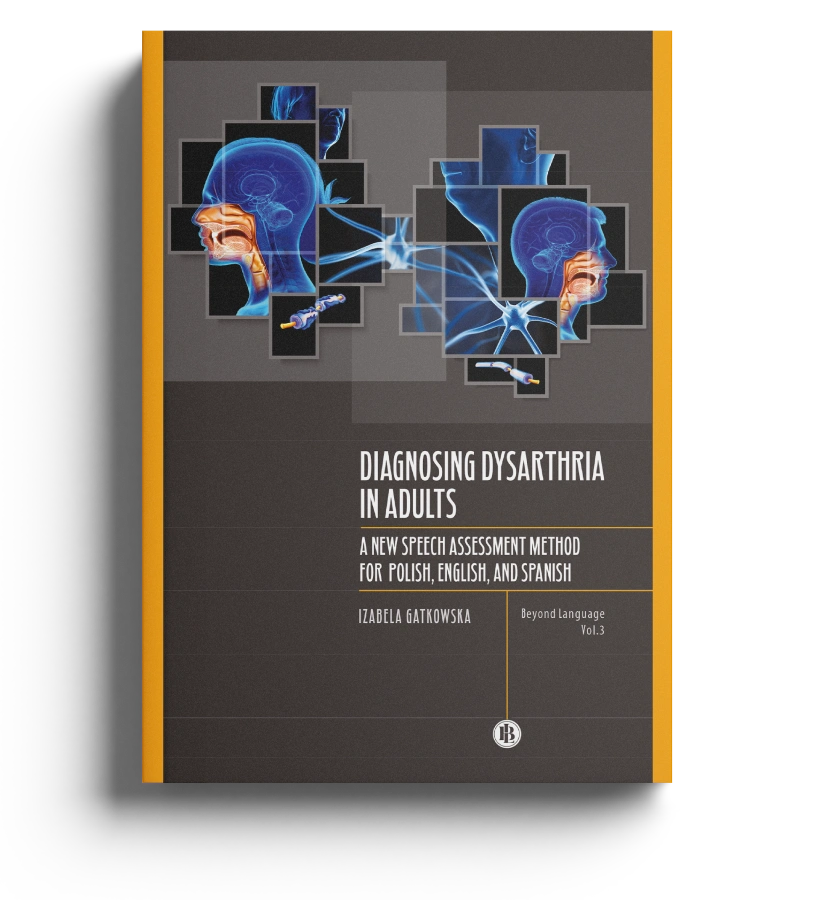
Diagnosing Dysarthria in Adults: A New Speech Assessment Method for Polish, English, and Spanish
Description
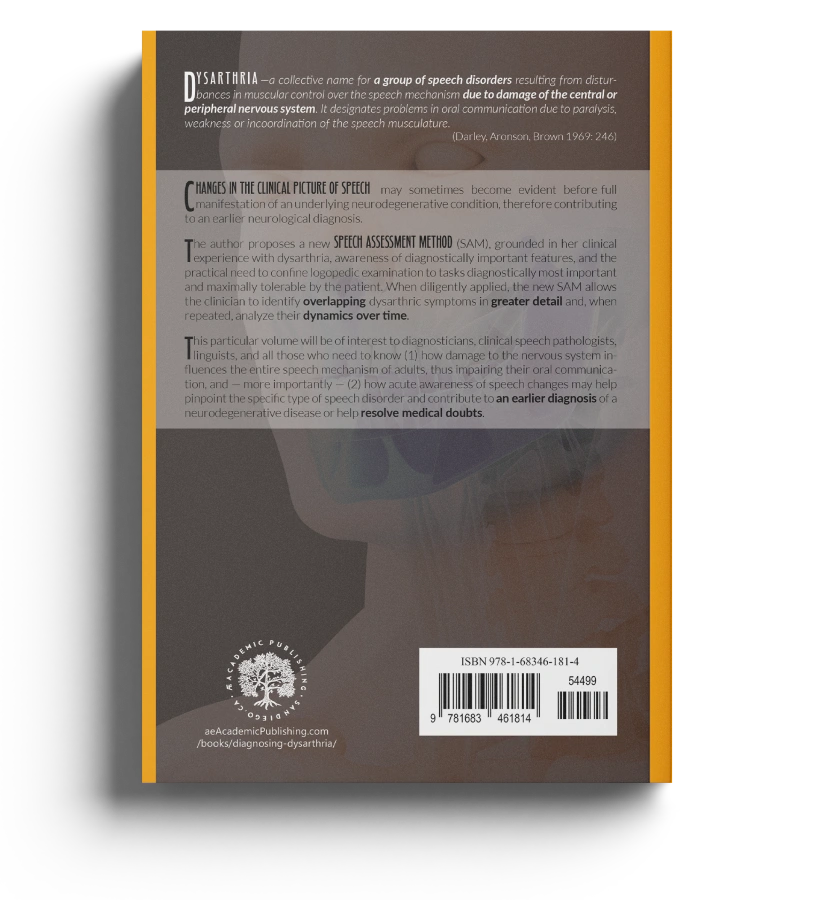
Izabela Gatkowska proposes a new SPEECH ASSESSMENT METHOD (SAM), grounded in her clinical experience with dysarthria, awareness of diagnostically important features, and the practical need to confine logopedic examination to tasks diagnostically most important and maximally tolerable by the patient. When diligently applied, the new SAM allows the diagnostician to identify overlapping dysarthric symptoms in greater detail and, when repeated, analyze their dynamics over time.
The point of departure for the current study is an analysis of the speech impairments observed in Polish adult neurological patients. Rooted in language, developed and tested in a neurological clinic, this original method of diagnosing dysarthric speech disorders shall be applicable for linguists, psychologists, diagnosticians, and clinical speech pathologists who work with patients speaking Polish, English, or Spanish. Dysarthria, after all, is a neurodegeneratively-conditioned speech disorder whose diagnosis is independent of the patient’s mother tongue.
FROM THE BOOK:
Changes in the clinical picture of speech may sometimes become evident before full manifestation of an underlying neurodegenerative condition, therefore contributing to an earlier neurological diagnosis. An accurate diagnosis of dysarthria may be indicative of a particular type of a neurodegenerative disease and thus confirm a diagnosis from the neurologist, or—in the case of an unclear presentation—it may help resolve medical doubts […]
Technical information
Author
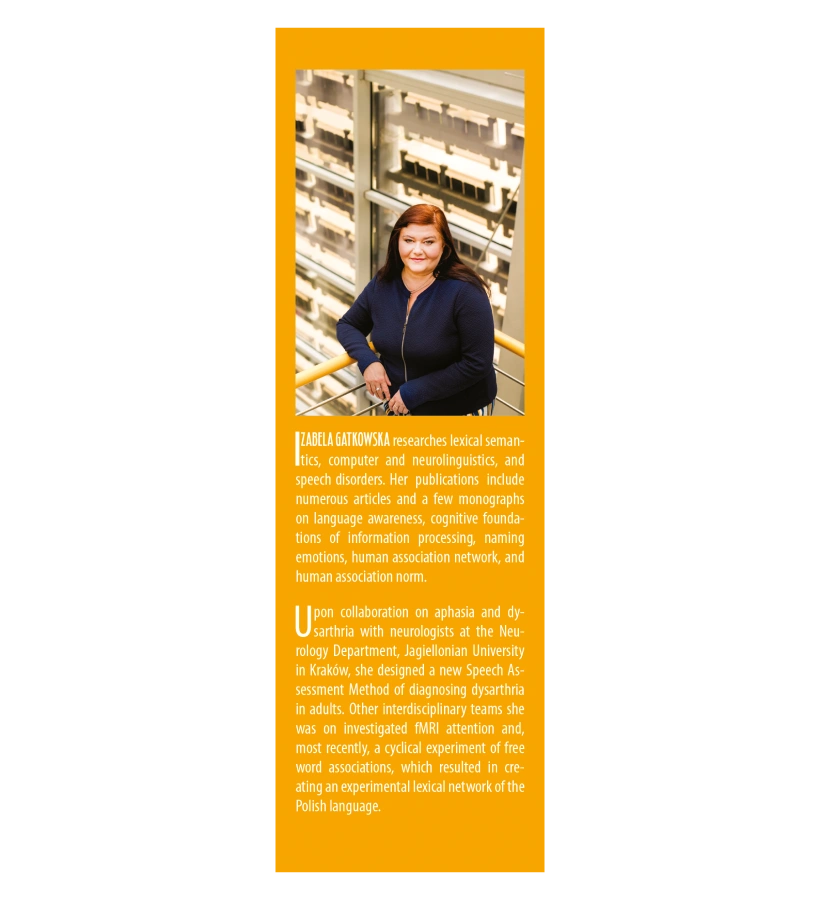
Izabela Gatkowska
Published in
2019
Series
Beyond Language
Volume
3
Editor
Piotr P. Chruszczewski, Aleksandra R. Knapik
Edition
1st Polish ed.
ISBN
pbk: 978-1-68346-181-4, ePub: 978-1-68346-183-8, mobi: 978-1-68346-182-1, pdf: '[978-1-68346-184-5], audio: CD-ROM, ISSN: 2642-6951 (print), 2642-696X (online)
# of pages
x + 116
Binding
pbk, glued
Dimensions
148 x 210 mm
Weight
232 g